
Effective general contractor coordination determines whether a construction project finishes on time or spirals into costly delays. A skilled contractor orchestrates dozens of trades, manages material deliveries, and ensures every subcontractor arrives precisely when needed. This coordination prevents the electrician from showing up before the framer finishes, keeps plumbing fixtures from sitting on site for weeks, and ensures inspections happen without holding up the next phase of work.
Why Timing Matters More Than Experience
The best framers, electricians, and plumbers in your area cannot deliver quality work if they arrive at the wrong time. A framing crew waiting three days for delayed lumber costs you money in lost productivity. An HVAC team arriving before drywall installers creates chaos and wasted trips.
Construction sites operate on sequential dependencies. Concrete must cure before framing begins. Rough electrical work happens after framing but before insulation. Finish carpentry waits until paint dries. Break this sequence, and you pay for it through extended timelines, frustrated trades, and compounding errors.
Professional general contracting means understanding these dependencies and building schedules that account for weather delays, inspection windows, and material lead times.
Building the Master Schedule in Stuart
Every successful construction project starts with a detailed master schedule that maps every trade, delivery, and inspection. This schedule identifies critical path items that cannot be delayed without pushing back the entire project completion date.
For example, on a custom home build, the foundation pour is a critical path item. If rain delays the pour by three days, every subsequent trade shifts by at least three days. Flooring installation, however, might have flexibility built in since it happens late in the schedule.
The master schedule also accounts for local factors. In Southeast Florida, summer afternoon thunderstorms regularly impact outdoor work. Experienced contractors build buffer time into exterior phases and schedule weather-sensitive tasks during drier months when possible.
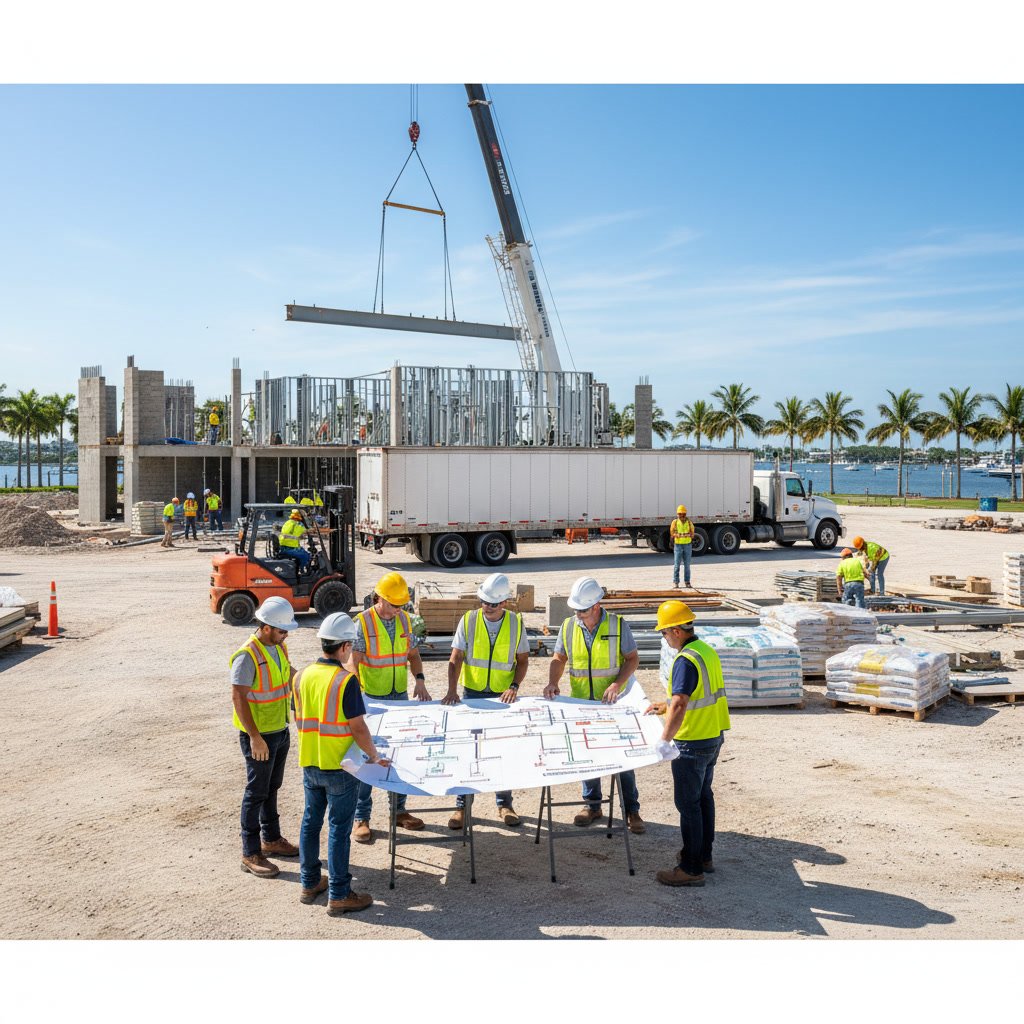
Managing Subcontractor Relationships and Availability
Top-tier subcontractors stay busy, often booking work months in advance. Securing their availability requires early commitment and clear communication about project timelines.
A contractor maintains relationships with multiple qualified subs in each trade. This provides backup options when scheduling conflicts arise and creates competitive pricing opportunities. However, the best results come from working with the same trusted teams repeatedly, since they understand your quality standards and communication style.
Regular schedule updates keep subcontractors informed about their anticipated start dates. When delays occur, immediate communication allows trades to adjust their schedules and avoid wasted trips. Many experienced contractors send weekly look-ahead schedules showing what happens in the next seven to fourteen days.
Material Procurement and Lead Time Planning
Material delays kill more construction schedules than any other single factor. Custom windows might require twelve weeks from order to delivery. Specialty tile could take eight weeks. Even common lumber dimensions sometimes face supply constraints.
Effective contractors identify long-lead items during the planning phase and order them immediately after contract signing. This means ordering windows and doors before breaking ground, securing custom cabinets during foundation work, and confirming appliance availability months before installation.
Just-in-time delivery prevents job sites from becoming cluttered storage yards while ensuring materials arrive when crews need them. A contractor coordinates with suppliers to schedule deliveries one to three days before installation, reducing theft risk and weather damage while keeping work areas accessible.
The Three-Week Look-Ahead System
Most successful contractors use a rolling three-week look-ahead schedule that provides increasing detail as work approaches. Week one shows exact tasks, crew sizes, and material needs. Week two identifies probable activities with confirmed subcontractor assignments. Week three outlines tentative work pending completion of earlier phases.
This system allows for adjustments without constant schedule rewrites. When the tile installer finishes two days early, the painter moves up from week two to week one. When inspection delays push back drywall, week three tasks shift accordingly.
Daily site visits allow the contractor to verify progress matches the schedule and identify potential bottlenecks before they cause delays. A quick walk-through reveals whether the plumber will finish rough-in on schedule or needs an extra day, allowing time to adjust the insulation crew’s start date.

Staging Areas and Site Logistics
A well-organized site improves efficiency and safety. Designated staging areas keep materials organized and accessible without blocking work zones or creating trip hazards.
Lumber deliveries go to the framing area. Electrical boxes and wire stay near the electrical panel location. Plumbing fixtures remain protected in a secure area until installation day. This organization prevents the common scenario where crews spend billable hours searching for materials scattered across the property.
Site access planning ensures delivery trucks can reach drop zones without blocking active work areas. On tight lots common in established neighborhoods, this might mean scheduling deliveries before 7 a.m. or coordinating with neighbors for temporary access.
Communication Protocols That Prevent Delays
Clear communication channels between the general contractor, subcontractors, suppliers, and homeowners prevent the misunderstandings that cause delays. Establishing a single point of contact eliminates confusion about who authorized changes or approved scheduling adjustments.
Many contractors use project management software that gives all parties real-time access to schedules, change orders, and site photos. Others rely on daily text updates and weekly progress meetings. The specific tool matters less than consistent, documented communication.
When working on occupied homes during custom home remodeling projects, communication becomes even more critical. Homeowners need advance notice about which areas become inaccessible, when dust-generating work occurs, and when deliveries arrive.
Inspection Scheduling and Municipal Coordination
Building inspections create hard stops in construction schedules. You cannot close walls until rough inspections pass. You cannot receive a certificate of occupancy until final inspections clear. Missing an inspection window can delay projects by days or weeks.
Experienced contractors request inspections as soon as work reaches the appropriate stage, understanding that inspectors often book out several days in advance. They also confirm inspection passage before releasing the next trade, preventing the scenario where drywallers arrive only to discover failed electrical rough-in that needs correction first.
Building strong relationships with local building departments helps smooth this process. Inspectors appreciate contractors who consistently deliver quality work and properly staged inspections. This relationship proves especially valuable when you need a special scheduling accommodation or clarification on code requirements.

Managing Changes Without Derailing the Schedule
Even well-planned projects encounter changes. Homeowners modify design details. Site conditions reveal unexpected challenges. Material substitutions become necessary when specified products go unavailable.
The key is evaluating how each change impacts the schedule and immediately adjusting subsequent work. When a homeowner requests a different tile that carries a six-week lead time instead of two weeks, the contractor must shift finish work trades and potentially fill the gap with other tasks.
Change order documentation includes schedule impact analysis. A simple plumbing fixture swap might cause zero delay. Adding a new window requires reordering materials, adjusting framing, and potentially rescheduling inspections, which could push completion back two weeks.
Projects like custom home building require particularly careful change management since each home is unique and modifications often cascade through multiple trades.
Technology and Traditional Methods Working Together
Modern scheduling software helps contractors track dozens of moving parts, but technology alone cannot replace experience-based judgment. Software shows that the HVAC installer should start Tuesday, but only an experienced contractor knows whether that crew typically runs on time or consistently shows up a day late.
GPS tracking on material deliveries provides real-time updates, yet relationships with local suppliers who prioritize your orders during shortages prove more valuable. Digital plans accessible on tablets improve communication, but nothing replaces face-to-face conversations that catch subtle concerns before they become problems.
The most effective approach combines digital tools for documentation and communication with hands-on site management built on years of construction experience. This is why companies founded by professionals with backgrounds in both field carpentry and large-scale project management often deliver superior coordination.
Bringing Fortune 500 Systems to Residential Construction
Residential construction traditionally operates with less formal project management than commercial work, yet homeowners deserve the same coordination standards applied to office buildings and retail centers.
Edmunds General Contracting applies enterprise-level project management systems to every residential project, whether a kitchen remodel or new construction estate. This approach means detailed schedules, documented communication, formal quality checkpoints, and accountability systems that prevent tasks from falling through cracks.
These systems prove particularly valuable on complex projects requiring coordination between architectural elements, structural engineering, and finish details. The same coordination skills that manage a commercial concrete shell translate directly to orchestrating the dozens of trades involved in turning a design concept into a finished custom home.
If you are planning a whole home remodel, understanding how your contractor will manage the coordination challenges helps set realistic expectations and identify contractors with proven systems rather than hopeful promises.
Successful construction projects rest on coordination that keeps every trade and material delivery aligned with an achievable schedule. The difference between a smooth build and a frustrating experience often comes down to whether your contractor applies proven project management systems or relies on reactive problem-solving. Edmunds General Contracting brings decades of hands-on construction knowledge combined with Fortune 500-level coordination to every project across Southeast Florida.
Whether you are planning new construction or a comprehensive remodel, professional coordination makes the difference between projects that finish on time and those that drag on for months. Reach out to discuss how systematic project management can keep your construction goals on track by calling +15618954016 or visiting our contact page to schedule a consultation.


